Cracked Tooth Diagnosis & Treatment in Melton
Why Cracked Teeth Need Prompt Attention
A cracked tooth might cause sharp pain when biting, sensitivity to temperature, or intermittent discomfort that’s hard to pinpoint. Left untreated, cracks can deepen — eventually splitting the tooth or allowing bacteria to infect the inner pulp.
At Woodgrove Dental in Melton, we use advanced diagnostic techniques including X-rays, transillumination, and bite testing to accurately locate and assess cracks.
Types of Tooth Cracks
Craze Lines
Superficial enamel cracks — usually harmless, requiring monitoring only.
Fractured Cusp
A piece of chewing surface breaks off. Usually painless and treated with a filling or crown.
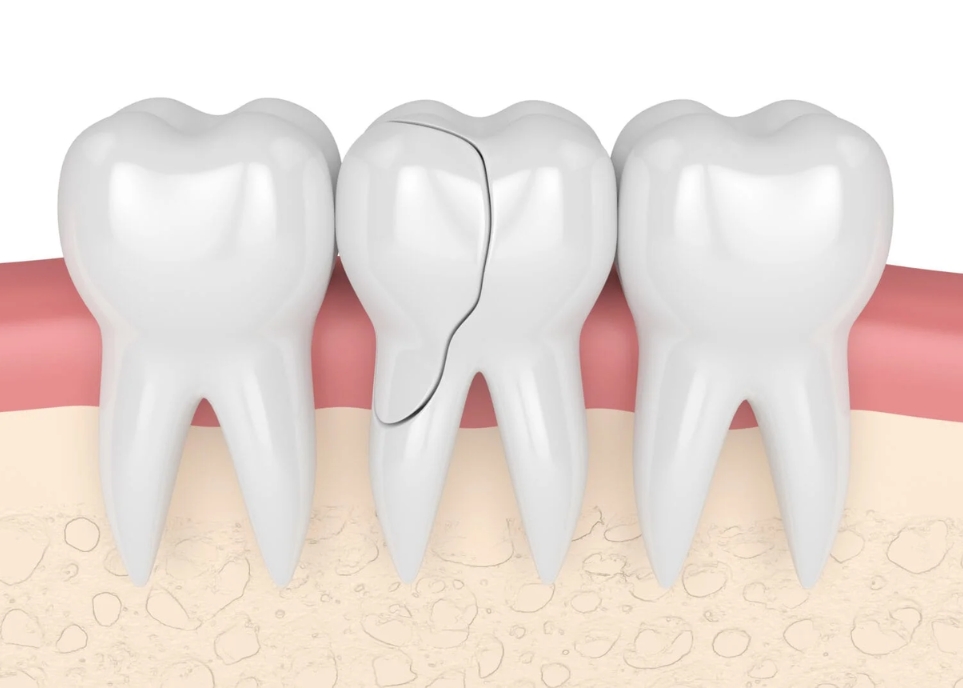
Cracked Tooth
Extends from chewing surface downward, potentially reaching the pulp. Treatment depends on depth.
Split Tooth
Tooth has split into two segments. May require extraction.
Vertical Root Fracture
Starts at root, travels upward. Often requires extraction.
Treatment Options
Composite filling — for minor surface cracks
Porcelain crown — to hold the tooth together and prevent worsening
Root canal + crown — when the crack reaches the pulp
Extraction — when the tooth cannot be saved
Frequently Asked Questions
How can I tell if I have a cracked tooth?
The typical symptoms include sharp pain during biting, pain sensitivity to hot or cold or intermittent pain. In certain cases, the existence of cracks is not visible and dental imaging has to diagnose it.
Can a cracked tooth heal on its own?
No, once a tooth is cracked, it won’t heal. Treatment is necessary to prevent the crack from worsening and to protect the tooth.
Is it painful to treat a cracked tooth?
Treatment is performed under local anaesthetic to ensure comfort. Post-treatment sensitivity is usually mild and temporary.
Will I need a crown or a filling?
It depends on the severity of the crack. Minor cracks may only require a filling, while deeper or larger cracks typically need a crown to restore strength and function.
Can I prevent tooth cracks in the future?
Yes—avoid chewing hard objects, wear a nightguard if you grind your teeth, and maintain regular dental check-ups to catch issues early.